

The Holy Dodekaimeron (Δωδεκαήμερον), or the Holy Twelve Days of Christmas, is the festal period beginning on the day of the Holy Nativity and ending on the Holy Baptism of our Lord and Savior Jesus Christ (Holy Theophany). This period is marked by three Despotic feasts (feasts honoring the Lord):
- The Lord’s Birth in the Flesh: December 25 (Gregorian or “new” calendar) / January 7 (Julian or “old”calendar)
- The Lord’s Circumcision and Name-giving: January 1 / January 14
- The Lord’s Baptism: January 6 / January 19
Counting the celebrations one-by-one, one realizes that if we include both the days of the Nativity and of Theophany in our counting, we end up with thirteen days instead of twelve. Additionally, as with every celebration in the Orthodox Church, each feast day is considered to begin with its Vespers service, on the evening of the previous calendar day. Finally, there is also a moveable feast in the Dodekaimeron, and that is the Sunday after the Nativity.
All of this might be confusing for the children. Therefore, in our material, just for reasons of clarity and simplicity, we begin counting the twelve days on the day of the Nativity (Dec. 25/Jan 7), and end with the Eve of Theophany, on the calendar day actually preceding the feast (Jan. 5/Jan. 13). When working on the twelve days, add in the moveable Sunday on whichever calendar day it falls on that specific year.
* PLEASE NOTE: During the Dodekaimeron, there are more feasts and saints celebrated than the ones we are working on in our material. In most cases, we chose to focus on one feast or saint for each day, to make it easier for the children to understand and process the information. We made two exceptions: Day 8 – The Circumcision of our Lord and the feast of St. Basil the Great; the Circumcision would have taken precedence as a Despotic Feast, however St. Basil and the “vasilopita” custom is an integral part of New Year’s Day in our Greek cultural background and we couldn’t omit it. Sunday after the Nativity – King David, St. Joseph the Betrothed, and St. James the Brother of our Lord – they are actually celebrated as one feast on that day.
OUR MATERIAL
Terms of use
Please note: The copyright of our work belongs solely to Orthodox Pebbles. We are offering our material to the public to be used as a whole, and only for classroom and personal use. This means we do not allow for users to break our material up into individual parts (images or text), or to copy images and text from our website, and use those parts in their own creations – analog, digital, or online – even if these creations are only meant to be used for teaching. For example, a user is not permitted to include our material in any way in their own slideshows, worksheets or videos (local or in the “cloud”), even if they mention us as the source. If you are interested in creating a specific teaching activity with our material, please contact us – we may be able to create it instead, for the benefit of the whole Orthodox community.
Additionally, we love seeing photos on social media of our material being used. However, if you want to showcase our work in any other way in a website, newsletter, blog or social media post, please contact us first.
Finally, we kindly ask that you do not directly share the material you download from our website with others. Please point them to our website instead, so they can download it from here.
Thank you for being fair and respectful of our work!
FREE PRINTABLES
We are offering two printable packets:
- One teaching packet with everything you need to do a lesson. It contains a worksheet for each day, one illustrated fact sheet for each day, a timeline, a craft template page, and illustrated circles that can be used for a variety of activities.
- A lapbook as an additional learning activity.
TEACHING PACKET
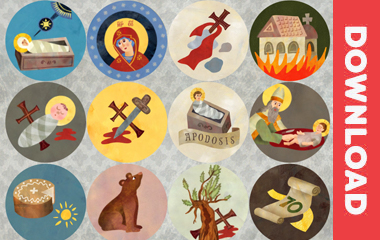
LAPBOOK

Printing problems? PLEASE CLICK HERE
TEACHING THE 12 DAYS OF CHRISTMAS
Objectives
Younger children
At the end of the lesson the children should be able to:
- State that there are twelve days of important Church celebrations after Christmas.
- Name the two most important Despotic Feasts of the period (Christmas/Nativity and Theophany), briefly describing what each feast celebrates (our Lord’s birth and His baptism).
- Explain that Christmas begins the twelve-day period, and Theophany ends it.
- Depending on the ability of the children, optionally name our Lord’s Circumcision as the third Despotic Feast included in that period.
- Place the above feasts on a rough timeline of the twelve-day period (not necessarily including calendar dates).
- When shown icons of the above feasts, recognize the icon of each, pointing to it.
- Name one more feast day included in the Dodekaimeron and describe what we celebrate on that day. Place it in the timeline and recognize its icon.
Older children
In addition to the above, older children should also be able to:
- Explain the three different levels of feasts included in the twelve-day period (see the Background section below for the details).
- Mention the exact calendar dates for the three Despotic feasts.
- Name more feast days included in the Dodekaimeron (including their calendar dates) and describe what we celebrate on each day. Place them in the timeline and recognize their icon.
Planning the lesson
This lesson is best done in more than one teaching sessions, depending on the age and ability of the children.
- Introduction: A memorable way to teach this topic is to make a large timeline on the wall, classroom board, or bulletin board. Number the days from 1 to 12, then add images of the first feast (Nativity) and the last feast (Theophany), plus dates if age-appropriate. You can use our resources to make your timeline or make our suggested candle wreath craft as your timeline project (see below). Keep adding feast images and dates on the timeline gradually as you work on them, until the timeline is complete.
- Icons: When discussing each celebration, it is very helpful to show the relevant icon(s). Point out the characters and their actions, and explain hidden meanings and symbolisms.
- Application: End your discussion focusing on how this theme relates to the everyday life of the children. What can they learn from it? How can they apply this teaching to their own life?
- Reinforcement work. Use some of our printable activities to reinforce what was taught. The children can fill in a worksheet after reading about each feast, make their own personal timeline, play games, or complete the lapbook.
HOW TO USE THE PRINTABLES
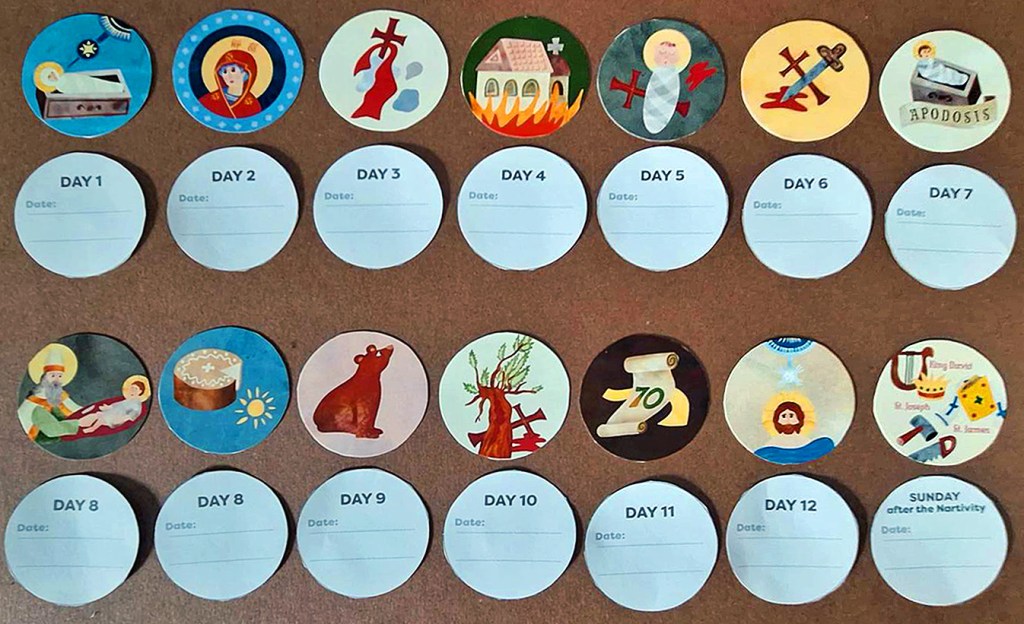
The material in the printable teaching packet is quite versatile. In addition to using the worksheets and fact sheets to assemble a thematic folder or binder, the circles can be cut out and used in different ways.
Play a game
Some game ideas follow but they are not exhaustive. After filling in the information on the white circles, all the circles can be shuffled and used for:
- Memory, matching each image with its description.
- As flashcards. One example would be for one child to show another child the image, and the second child having to say the corresponding details in order to keep the card. Alternatively, the first child could describe the card (e.g. “it shows a cake and a coin”) instead of showing it. Or the second child could ask questions about the card (“does it have an animal on it?”) in order to find which one it is. There are many variations that one can come up with.
- Sorting game: two teams get to compete in placing the images in the correct order, then placing their descriptions underneath. The fastest team wins. This could also be turned into a relay race. The cards are placed face down on a pile somewhere far away; the children of each team take turns running to their pile of cards, picking up the card that is on top, moving it to a designated spot and placing it in the correct order. Again, there are many variations of this idea one can come up with.
- Scavenger hunt: This option is not competitive, the group has to work together. The cards are hidden around the room and the children have to find them and sort them. Make it more challenging by imposing a time limit.
Make a craft
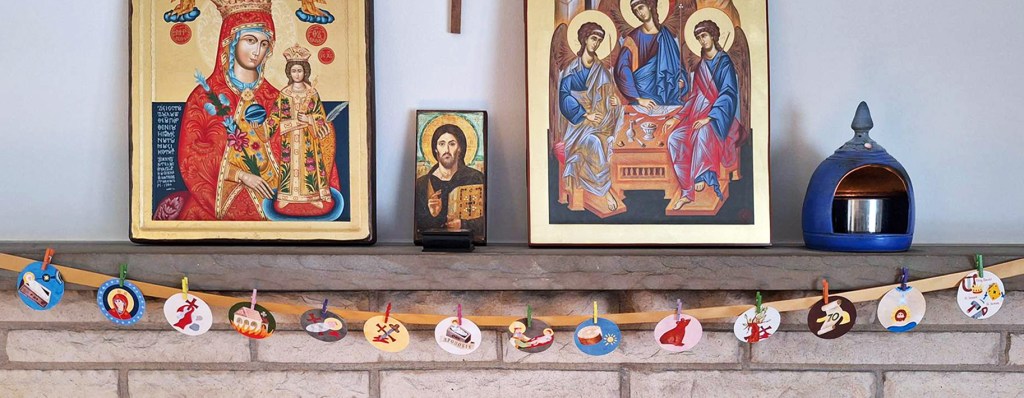
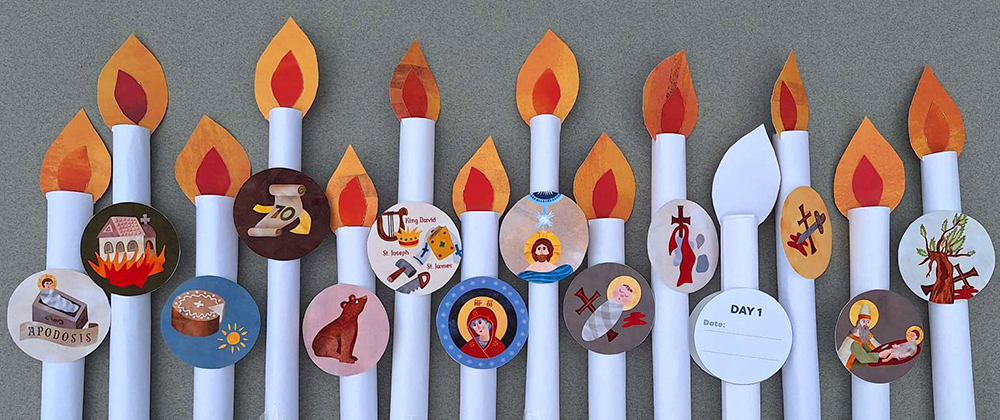
Again, there are many ways one could make a craft with these circles. After gluing the images and their corresponding white circles back-to-back, they could be turned into some kind of timeline garland, horizontally or vertically. Or they could be turned into Christmas tree ornaments by being glued on larger circles cut out of colored paper. Another option would be to make the paper candle wreath we are showing below.
Paper candle wreath craft
This is a more complicated craft inspired by the Advent tradition of the candle wreath. It would be best to work on it for a few days, adding the candles gradually.
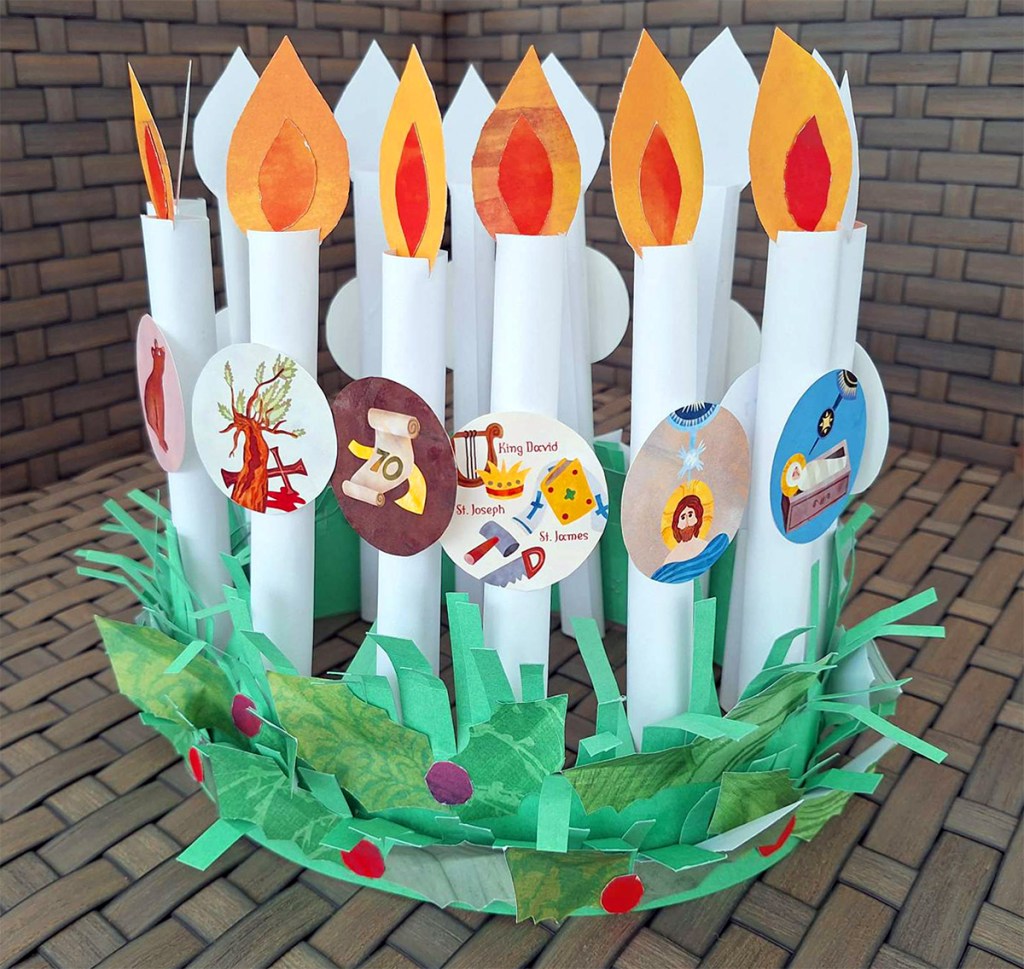
You will need
- A large piece of green poster board (we used a 22″x28″ piece, cutting two strips all the way across).
- Another kind of green paper for the leaves (we used scrapbooking paper but any green paper, such as wrapping or collage paper would work). This is optional.
- Orange and red paper for the little berries and the flames (again, we used scrapbooking paper but any other colored paper would work).
- Plain white paper (we used crafting paper which is a little sturdier, but plain printer paper works fine).
- Scissors, glue, tape, stapler, a wooden spoon, double-sided tape is very handy but not necessary.
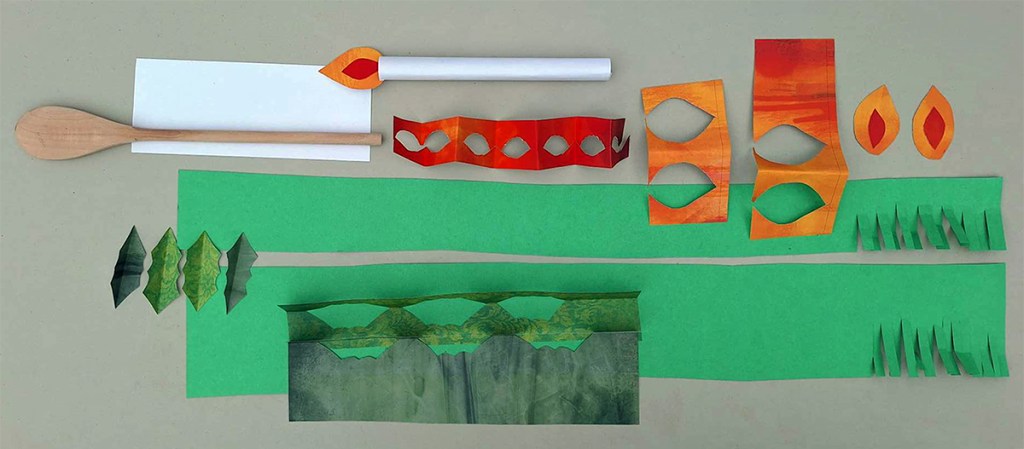
What to do
MAKE THE WREATH
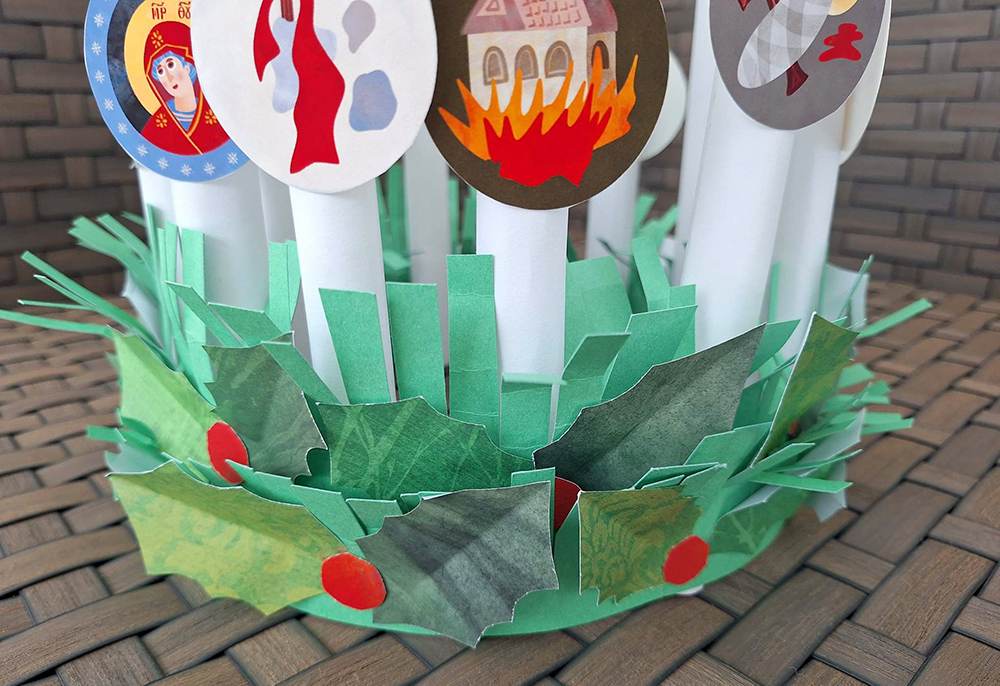
Cut out two strips of sturdy green paper, about 28″ long. One should be about 5-6″ high, and the other one about 3.5″ high. Cut slits on one side of each strip, about 2″ deep and spaced about 0.25″ apart. Place the shorter strip on top of the longer one as shown, and staple them together into a cylinder. Randomly fold the thin strips at different heights to point toward the center of the cylinder or to the outside. You can leave the wreath as is and proceed with making the candles or you can choose to further decorate it with holly leaves and berries.


DECORATE THE WREATH
Use the provided templates to cut out holly leaves from the second green sheet of paper as shown in the photo. It is faster if you fold two or three strips of paper together and cut out a few leaves at once. Glue or tape the leaves onto the wreath, some on the outside paper and some on the inside, as shown. Double-sided tape works well as it is fast and very clean, but glue can also work.
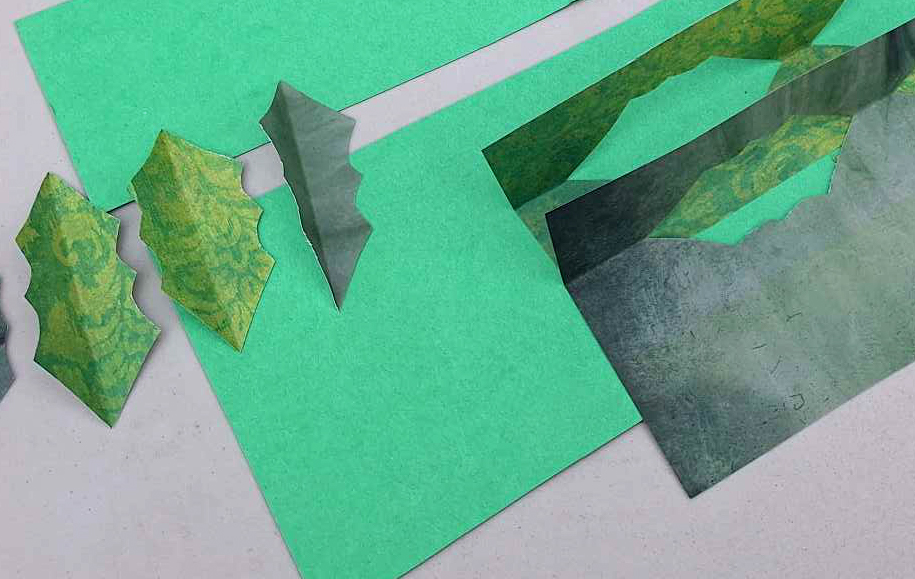

If you wish, cut out red circles about 0.5″ in diameter and embellish the wreath all around.
MAKE THE CANDLES
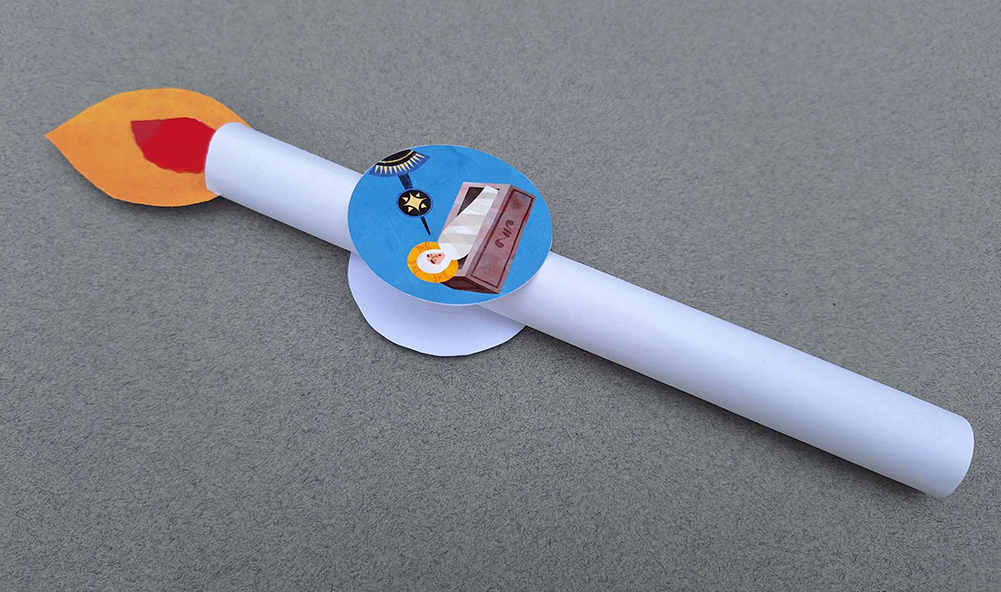
Cut out 14 paper rectangles using the template provided. Roll each rectangle into a long, narrow cylinder about 0.75 in diameter with the help of a wooden spoon. Secure the cylinder using regular tape – it is the easiest and cleanest option, and it doesn’t really show on the white paper. Cut out the flames from yellow and red paper, using the provided templates. Again, it is faster if you fold the paper and cut out many shapes at once. Glue the little red flames onto the yellow ones. Cut two tiny slits on the top of the cylinder. Add a tiny drop of glue onto each slit, then insert the flame as shown. Let the glue dry. Glue one image circle onto one side of the candle, then its corresponding white circle on the opposite side.



ASSEMBLE THE WREATH
Secure the candles onto the inside of the wreath with a little double-sided tape or glue. READY!
THE LAPBOOK
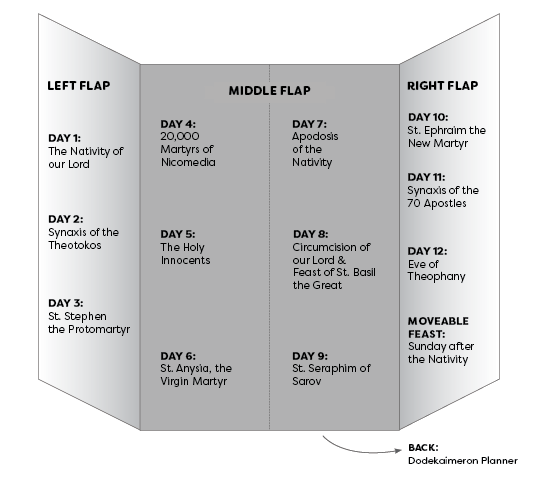
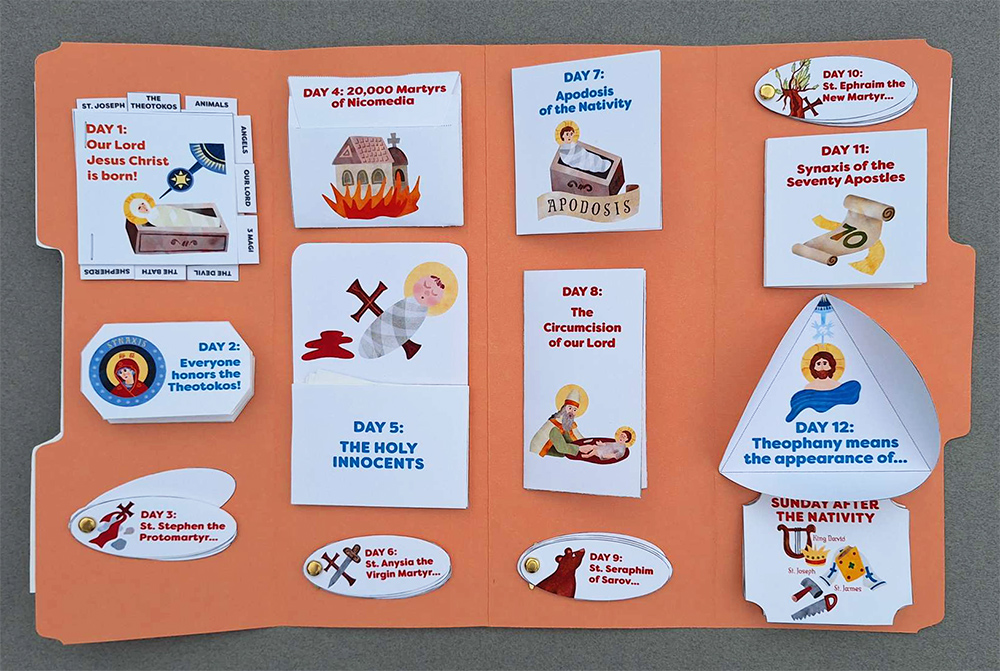
The Dodekaimeron lapbook is made out of one file folder, refolded to open like window shutters. A variety of mini-books of different shapes and styles is placed inside the folder. Constructing the different mini-books and filling them with information makes for a creative, interesting, and memorable way for students to process and acquire knowledge.
In class, the lapbook can be completed over one or more lessons, depending on the available time. At home, the student can work on the lapbook one day at a time, starting with the cover and planner, then working on each theme, aiming to have the whole lapbook completed by the Eve of Theophany.
Directions for each part of the lapbook are offered inside the packet. Below, please find some photos and brief descriptions.
Outside and inside


Day 1: Tab book

This activity helps discuss the icon of the Nativity. On each page, the child draws a picture of a part of the icon. If they wish, they can also write a basic fact about it. There is a copy of an icon of the Nativity inside the packet that can be used for reference.
Day 2: Octagon accordion book
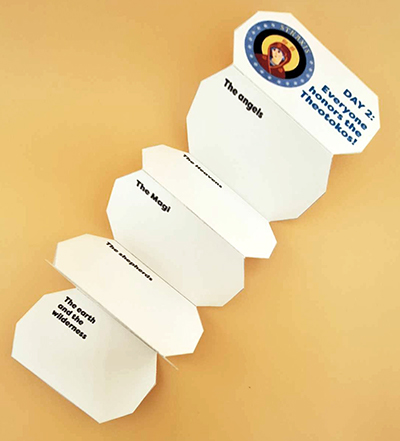
The child looks at the icon of the feast and reflects on the Nativity troparion from which the icon is derived. Then s/he draws a picture for everyone who is shown in the icon to be honoring the Theotokos. There is a copy of the troparion and the icon of the Synaxis of the Theotokos in the packet for reference.
Days 3, 6, 9, and 10: Fan books

There are four fan books in this lapbook, each having to do with the life of a celebrated saint. On each piece, the child writes (or draws a picture of) a characteristic of the saint or a fact from his/her life.
Day 4: Pocket and accordion

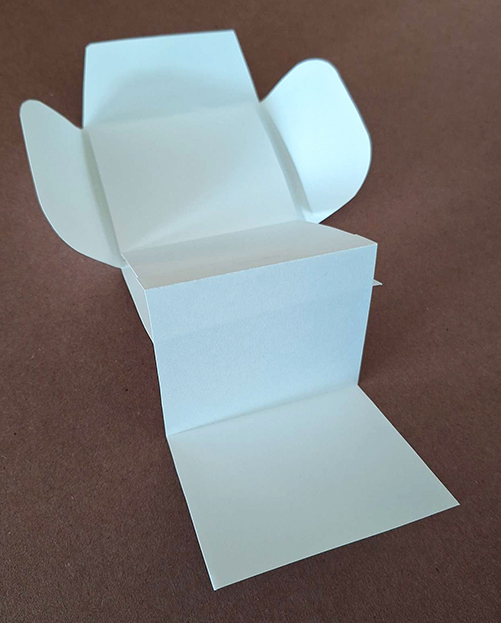
On each part of the accordion, the child writes (or draws a picture of) a scene from the story of the martyrdom of the 20,000 martyrs of Nicomedia.
Day 5: Pocket with cards
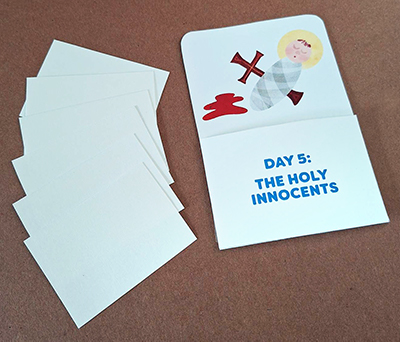
The child draws a comic strip of the story of the Holy Innocents, each card showing one panel. Then the child places the cards in order and tells the story.
Day 7: Simple fold book
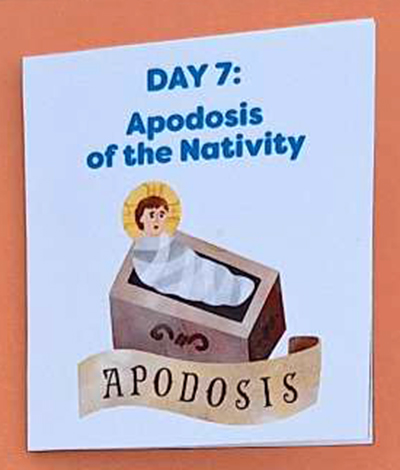
The child opens up the book and writes an explanation of the term “Apodosis of a feast” or traces the words.
Day 8: Trifold pocket with cards

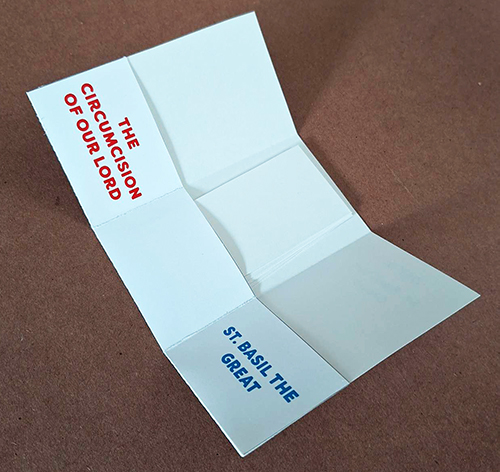
This activity helps discuss both of the feasts commemorated on this day. The child writes (or draws a picture of) a detail about each feast on every card. The cards are then shuffled and placed in the center pocket. The child takes out the cards from the center pocket and has to sort them, deciding whether each card belongs to the left pocket (Circumcision) or to the right one (St. Basil).
Day 11: Accordion T-book
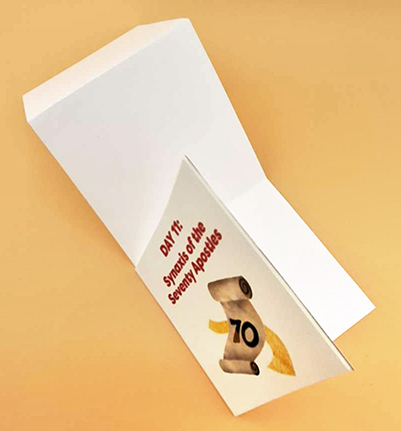
On each of the four parts of the mini book, the child writes or draws a picture of some information about the Holy Seventy Apostles.
Day 12: Triangle petal book
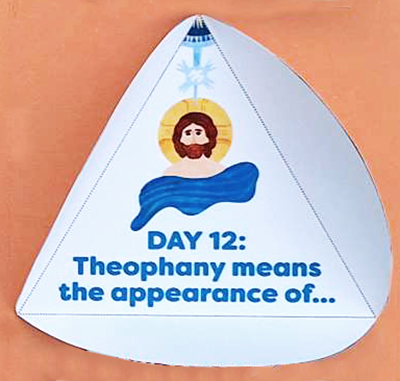
The child writes a Person of the Holy Trinity on each petal.
Moveable feast: Sunday after the Nativity
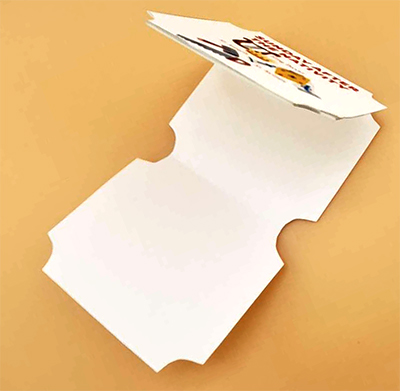
On each of the three parts of the mini book, the child writes about or draws a picture of one of the saints of the day.
BACKGROUND
Three levels of celebration of the Dodekaimeron
Each day of the year, the Church remembers her saints who witnessed Christ and lived from the time of the Old Testament until our own time; in a few occasions we commemorate a saint several times in the year. In the case of the Holy Dodekaimeron, we can observe three layers of celebration:
On the first level, we commemorate events and holy people linked directly to Christ’s earthly life, from His Incarnation to His Ascension, such as Herod’s slaughtering of the 14,000 infant boys in the area of Bethlehem or the Circumcision and naming of the Lord.
On the second level, we commemorate the saints that interacted with our Lord and witnessed Him during the time of the early Church, such as the Seventy Apostles and Saint Stephen the Protomartyr.
On the third level, we remember the saints that lived and honored Christ in the centuries after Pentecost until our time, such as Saint Basil the Great (4th c.), Saint Ephraim the New Martyr (15th c.), or Saint Seraphim of Sarov (19th c.).
In its centuries-long formation, the twelve day Christmas period that we follow today developed into a theological and historical collection of celebrations honoring both the life of Christ and the life of the Church through its Christian Witness.
Details about each day
A list of the twelve-day-of-Christmas celebrations that we chose to explore in our material follows. Details about each day can be found in our printable teaching packet, as well as on the webpages linked here, from the Orthodox Church in America (OCA) and the Greek Orthodox Archdiocese of America (GOArch). We are also providing links to the daily Scripture reading we selected to include in our teaching packet.
- DAY 1 – The Nativity of our Lord; The Adoration of the Magi; Commemoration of the Shepherds in Bethlehem: OCA – GOArch – Scripture reading –
Our own web page on the Nativity - DAY 2 – Synaxis of the Most Holy Mother of God: OCA – GOArch – Scripture reading
- DAY 3- Protomartyr and Archdeacon Stephen: OCA – GOArch – Scripture reading
- DAY 4 – 20,000 Martyrs of Nicomedia: OCA – Scripture reading
- DAY 5 – 14,000 Infants (the Holy Innocents) slain by Herod at Bethlehem:
OCA – Scripture reading - DAY 6 – Virgin Martyr Anysia at Thessalonica: OCA – Scripture reading
- DAY 7 – Apodosis of the Nativity: GOArch – Scripture reading
- DAY 8 – The Circumcision of our Lord and Savior Jesus Christ; Saint Basil the Great: OCA – GOArch – Scripture reading – Our own web page on St. Basil
- DAY 9 – Repose of Venerable Seraphim, Wonderworker of Sarov: OCA – Scripture reading
- DAY 10 – Finding of the relics of Venerable Ephraim the new martyr: OCA – Scripture reading
- DAY 11 – Synaxis of the Seventy Apostles: OCA – Scripture reading
- DAY 12 – Eve of the Theophany of our Lord and Savior Jesus Christ: OCA – GOArch – Scripture reading – Our own web page on Theophany
- MOVEABLE FEAST, Sunday after the Nativity – Commemoration of the Holy Righteous David the King, Joseph the Betrothed, and James the Brother of the Lord: OCA – Scripture reading
External resource
A wonderful book with background and activities for the twelve days of Christmas for families is the following: Celebrating the Twelve Days of Christmas: A Family Devotional in the Eastern Orthodox Tradition by Amanda Eve Wiggleworth.
 Orthodox Pebbles